

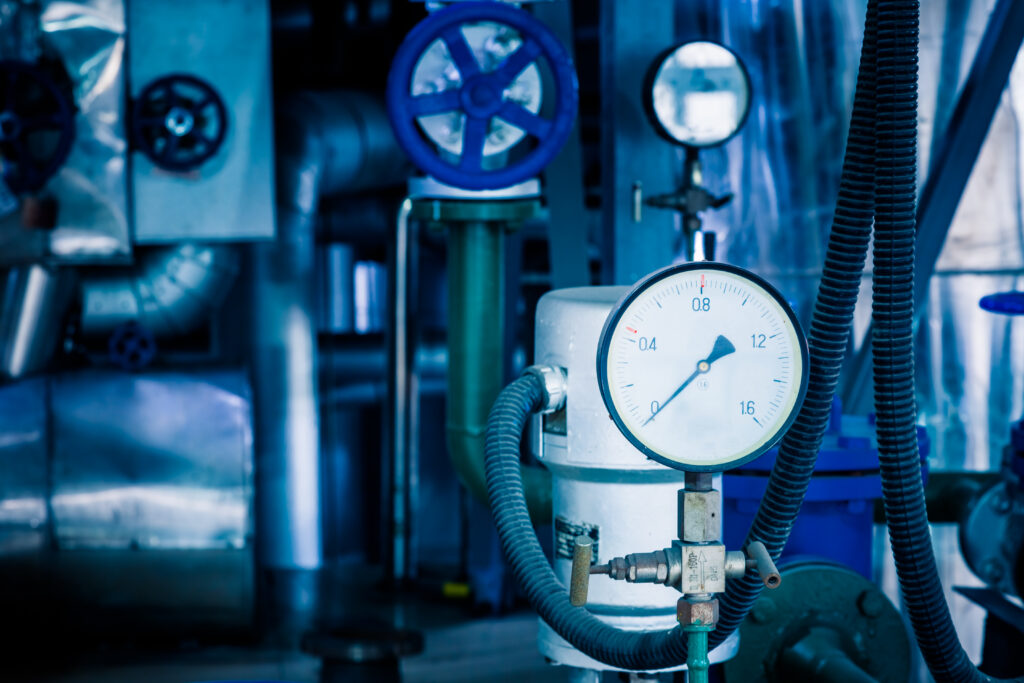
In industries where fluid movement is central to operations—like oil & gas, water treatment, pharmaceuticals, chemical manufacturing, and food processing—flow measuring instruments are vital tools. These devices monitor and control the volume, velocity, or mass of liquid and gas flow within a pipeline or system.
However, like all precision instruments, flow meters are prone to errors due to wear, environmental changes, and drift over time. That’s why calibration of flow measuring instruments is not only recommended but essential for ensuring consistent, reliable, and accurate readings.
What is Flow Meter Calibration?
Flow meter calibration is the process of comparing a flow meter’s readings against a known standard under controlled conditions. If discrepancies are found, the meter is adjusted or its measurements corrected to match the reference standard.
Calibration is performed on various types of flow meters, such as:
- Electromagnetic (Mag) meters
- Ultrasonic flow meters
- Turbine and vortex flow meters
- Coriolis mass flow meters
- Positive displacement meters
- Thermal mass flow meters
Whether used for billing, batch control, or safety regulation, accurate flow measurement is critical—and calibration is the only way to ensure it.
Why Calibration is Crucial
Inaccurate flow readings can lead to:
- Product loss or overconsumption
- Reduced process efficiency
- Faulty billing or financial discrepancies
- Compromised product quality
- Safety hazards or regulatory violations
For example, in pharmaceutical manufacturing, even a slight deviation in liquid dosage can render a batch unsafe. In oil pipelines, uncalibrated meters can lead to millions in lost revenue.
Regular calibration minimizes these risks and offers the following benefits:
Accuracy and reliability
Compliance with industry standards (ISO, ASTM, NABL)
Reduced downtime and maintenance costs
Improved operational efficiency
Trust in measurements for critical decision-making
When Should Flow Measuring Instruments Be Calibrated?
The ideal calibration frequency depends on:
- Type of instrument and its application
- Environmental conditions (humidity, temperature, corrosion)
- Manufacturer’s guidelines
- Criticality of the process
- Industry regulations
However, as a general guideline:
- Annually for standard operations
- Every 6 months for critical or high-accuracy processes
- After repairs, relocation, or impact damage
- Before major audits or certifications
Some industries maintain strict calibration schedules as part of their ISO 9001 or GMP (Good Manufacturing Practice) compliance.
Flow Meter Calibration Methods
Calibration of flow measuring instruments is carried out using traceable reference standards in either laboratory or field settings. Here are the most common methods:
1. Gravimetric Method
In this method, the fluid passed through the flow meter is collected and weighed over time. Since mass and time are accurately measurable, the flow rate can be precisely calculated.
- Best for: Low- to medium-flow liquid calibration
- Advantage: High accuracy and traceability
- Drawback: Time-consuming, requires temperature and pressure correction
2. Volumetric Method
Here, the volume of fluid collected in a tank over time is measured to determine flow. It is quicker than gravimetric methods but may be slightly less accurate.
- Best for: Water and other non-viscous liquids
- Uses: Field calibration and verification
- Drawback: Susceptible to errors from temperature fluctuations
3. Master Meter Method
A reference (master) flow meter with a known calibration is placed in series with the test flow meter. The readings of both are compared over a flow range.
- Best for: High-flow or gas applications
- Advantage: Fast and suitable for field calibrations
- Drawback: Accuracy depends on the stability of the master meter
4. Piston Prover or Bell Prover
Often used in gas flow meter calibration, this system uses a piston or bell chamber that moves with known volume and speed to measure flow.
- High precision
- Common in custody transfer or gas metering applications
Accredited Calibration Standards
Flow calibration must be traceable to national or international standards. In India, top calibration labs follow:
- ISO/IEC 17025 – General requirements for testing and calibration labs
- NABL Accreditation – For certified traceability
- OIML and ASTM standards – For legal and industrial metering systems
Calibrated instruments should come with:
- A calibration certificate detailing test conditions, measurement uncertainty, and results
- A traceability declaration linking to national standards
- Pass/fail status and next due calibration date
On-Site vs. Laboratory Calibration
On-Site Calibration
- Portable equipment
- Fast and convenient
- Minimal system downtime
- Ideal for large systems or where removal is difficult
Laboratory Calibration
- Conducted in controlled environments
- Highest accuracy
- Suitable for custody transfer meters, high-precision instruments
- Often done during maintenance or new meter procurement
Industries That Depend on Flow Calibration
- Oil & Gas – Fuel dispensing, pipeline monitoring
- Water Supply & Wastewater Treatment – Billing, leak detection
- Pharmaceuticals – Batch dosing and fluid management
- Food & Beverage – Liquid filling and processing
- Chemicals & Petrochemicals – Reactor flow and mixing control
- Power Generation – Boiler feed water, coolant flow
- HVAC and Energy Audits – Chiller and heating system monitoring
Best Practices for Flow Calibration
- Use calibrated reference standards
- Monitor environmental conditions (temperature, pressure)
- Account for fluid properties (viscosity, density)
- Document before-and-after calibration readings
- Implement automated calibration reminders or logs
- Work with accredited labs or trained personnel
Conclusion
Calibration of flow measuring instruments is not just a technical requirement—it’s a critical quality and safety assurance step across modern industries. As technology evolves and precision becomes paramount, regular and traceable calibration ensures that every drop, every measurement, and every process counts.
Whether it’s for compliance, accuracy, or system optimization, investing in proper flow meter calibration pays off through improved efficiency, trust, and long-term reliability.